















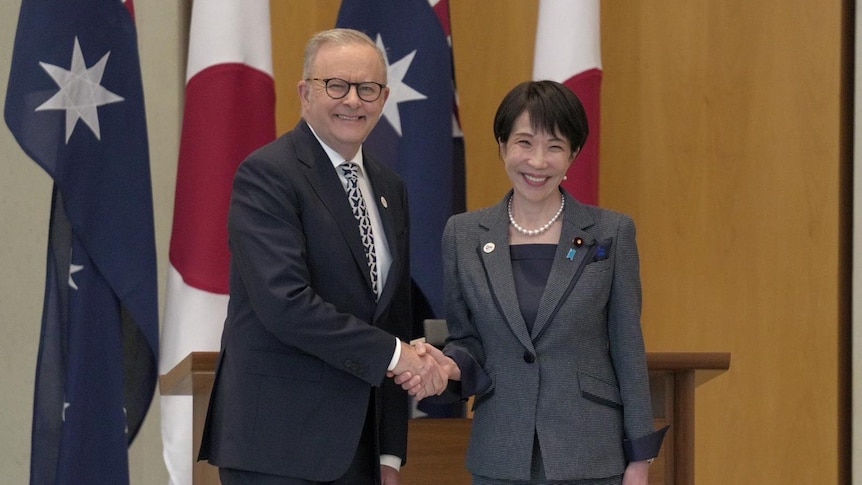
Canberra – Australia and Japan have signalled a significant strengthening of their defence and security partnership, describing their relationship as reaching “quasi-allies” status during annual leadership talks on Monday.
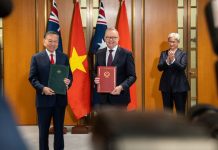
Prime Minister Anthony Albanese and visiting Japanese Prime Minister Sanae Takaichi met in Canberra as the two nations celebrate 50 years since signing the landmark Basic Treaty of Friendship and Cooperation in 1976. While the leaders signed four separate agreements covering defence, energy, critical minerals, and economic security, defence cooperation featured prominently in their discussions and outcomes.
Takaichi touched down late Sunday local time in Canberra for the three-day visit, which will focus on defense, critical minerals and broader economic security. The two countries have grown increasingly concerned about the changing security and economic environment in the region, with Japan taking a more assertive military stance and looking to build economic ties and stable supply chains with nations such as Vietnam.
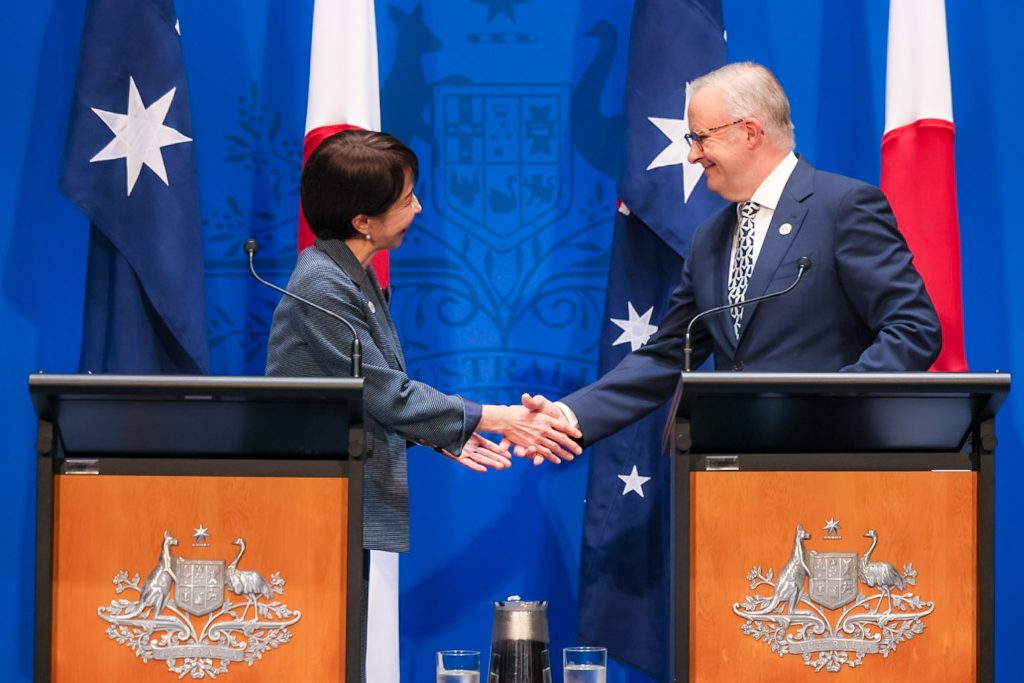
A new Leaders’ Statement on Defence highlights the “unprecedented strategic alignment” between the two countries and the growing number of joint military and security activities.
Prime Minister Takaichi stated that defence ministers from both nations will now explore “tangible” measures to “further elevate and institutionalise comprehensive security cooperation.”
This directive aims to move the partnership beyond ad-hoc activities toward more structured and enduring collaboration.Mr Albanese described the Australia-Japan relationship as “increasingly indispensable in difficult times,” while Ms Takaichi went further, declaring the two countries are now “quasi allies.”
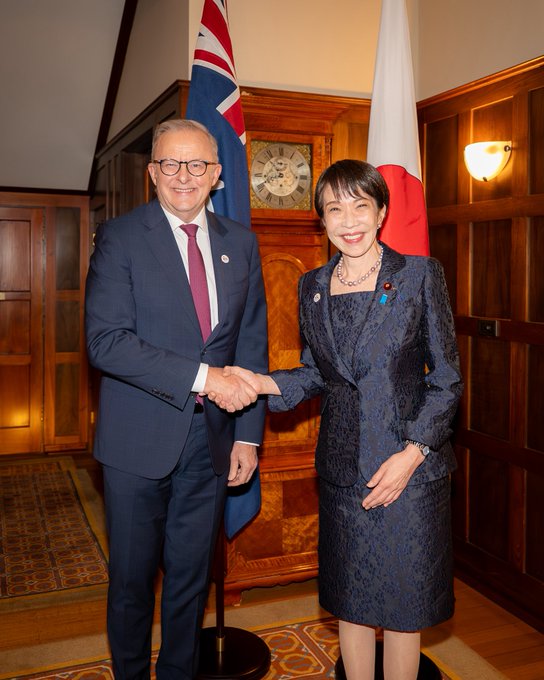
The defence statement builds on existing strong foundations, including reciprocal access agreements, joint exercises, and growing interoperability between the Australian Defence Force and the Japan Self-Defense Forces.
Both nations share concerns about regional security dynamics in the Indo-Pacific.The leaders’ meeting also produced a Joint Declaration on Economic Security Cooperation, which commits Australia and Japan to consult closely and “consider measures in response” to economic contingencies, including those arising from geopolitical tensions or economic coercion.
Though the declaration does not name specific countries, it expresses strong concerns over export restrictions on critical minerals and non-market practices — references widely interpreted as directed at China. Supporting the broader security agenda, the two countries also signed agreements to deepen cooperation on energy security and critical minerals, identifying six strategic rare earths projects — including Lynas Rare Earths in Kalgoorlie and Alcoa’s Gallium Recovery Project — to build more resilient supply chains.
The developments reflect a maturing strategic partnership between two of the region’s most capable democracies, with defence and economic security now sitting at the heart of bilateral relations.