
















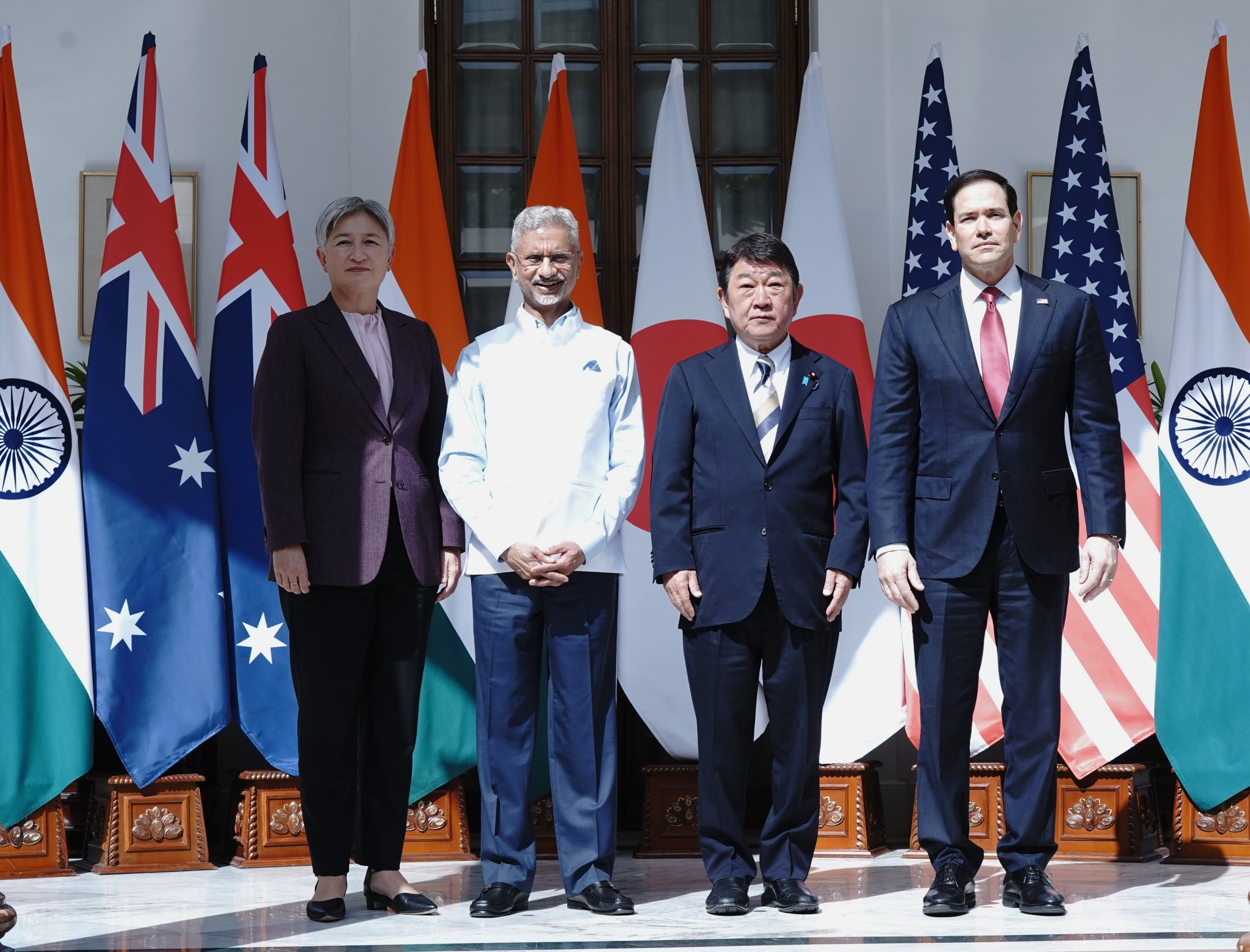
NEW DELHI — The foreign ministers of the Quadrilateral Security Dialogue — Australia, India, Japan, and the United States — concluded a high-profile meeting in New Delhi on Tuesday without delivering a date or venue for the next Quad leaders’ summit, a notable omission that has raised questions about the group’s forward scheduling amid growing regional tensions.
The meeting, hosted by India and attended by the foreign ministers of Australia and Japan alongside the U.S. Secretary of State, produced a sweeping joint statement that reaffirmed the group’s commitment to a “free and open Indo-Pacific” and announced several new initiatives, including a port development project in Fiji and a critical minerals framework. However, the absence of concrete plans for the next heads-of-government gathering stood in contrast to the detailed sectoral agreements unveiled during the talks.
Quad to Develop Port Infrastructure in Fiji
In one of the most significant announcements to emerge from the meeting, the Quad countries said they would work “in coordination with the Government of Fiji, to advance port infrastructure and associated activities in the country.” The move is part of the group’s broader “Ports of the Future” initiative, which India had hosted a conference for in October 2025. Officials described the Fiji port project as a direct response to the need for trusted, resilient infrastructure in the Pacific Islands region, where maritime connectivity remains a strategic priority.
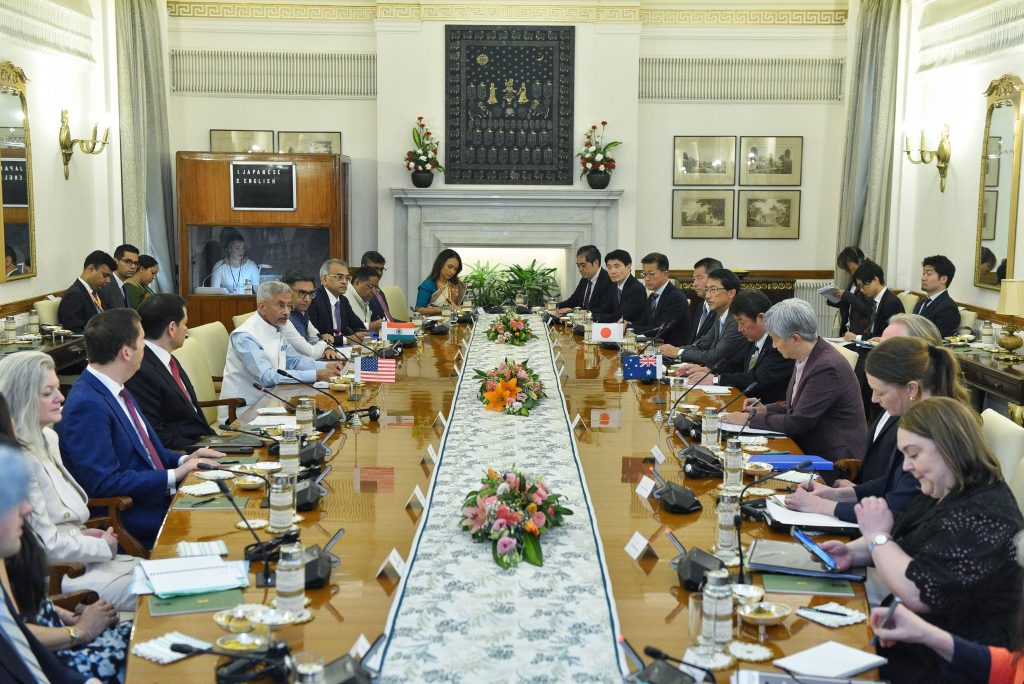
The announcement is widely seen as part of the Quad’s efforts to offer alternative infrastructure financing and development models in the Indo-Pacific, a region where China has invested heavily in port facilities and other strategic assets under its Belt and Road Initiative. While the joint statement did not name any country, the language about opposing “economic coercion” and “non-market policies and practices including arbitrary export restrictions, price manipulation, and disruptions” was understood by analysts as an indirect reference to Beijing’s trade and infrastructure practices.
Unnamed Criticisms of Regional Actors
The joint statement also took aim at unspecified nations over maritime behavior, military cooperation, and cross-border terrorism — language that diplomats familiar with the talks acknowledged was directed at both China and Pakistan.
On maritime security, the ministers expressed “serious concerns regarding dangerous and coercive actions, including interference with offshore resource development, the repeated obstruction of freedom of navigation and overflight, and the dangerous manoeuvres by military aircraft and coast guard and maritime militia vessels, especially the unsafe use of water cannons and flares, and ramming or blocking actions in the South China Sea.” They also reiterated that the 2016 arbitral tribunal ruling on the South China Sea — which Beijing rejects — is “a significant milestone and the basis for peacefully resolving disputes.”
The Quad further expressed “deep concern about countries that are deepening military cooperation with North Korea,” a statement widely interpreted as a rebuke to Russia and, indirectly, to China for their expanding military ties with Pyongyang.
On counterterrorism, the ministers specifically condemned the terrorist attack at Pahalgam in India on April 22, 2025, and the Bondi Beach attack in Australia on December 14, 2025. They called for action “including cross-border terrorism” — a phrase routinely used by India to reference Pakistan-based militant groups.
Major Agreements Signed or Announced
Despite the summit scheduling gap, the foreign ministers announced a raft of concrete agreements and initiatives:
Quad Critical Minerals Framework: A new guiding document to coordinate economic policy tools and private sector investment to strengthen supply chains for critical minerals, including mining, processing, and recycling. The initiative aims to reduce reliance on any single country for materials essential to electric vehicles, defense systems, and electronics.
Quad Initiative on Indo-Pacific Energy Security: A cooperative effort to ensure open, stable energy markets and diversified supply chains, with a focus on protecting energy product flows that affect fertilizer and food security across the region.
Maritime Domain Awareness Expansion: India operationalized the Indian Ocean Region programme of the Quad Indo-Pacific Partnership for Maritime Domain Awareness through its Information Fusion Centre in Gurugram. The Quad also launched the Indo-Pacific Maritime Surveillance Collaboration to share real-time vessel-tracking data, initially in the Indian Ocean.
Second Quad-at-Sea Ship Observer Mission: Following a successful mission from Palau to Guam in July 2025, India will host the next edition to enhance interoperability against unlawful maritime activities.
Countering Online Scam Centers: The Quad deepened cooperation on law enforcement and regulatory engagement to combat online scam centers in Southeast Asia linked to human trafficking, drug smuggling, and cybercrime.
Undersea Cable Resilience: The Quad claimed that all Pacific Islands Forum countries would be connected via undersea cables by 2026, with continued work on trusted redundancy for digital infrastructure.
Humanitarian Assistance and Disaster Relief: The Indo-Pacific Logistics Network, launched as a pilot in 2024, will advance toward standard operating procedures, including a second tabletop exercise hosted by Japan in 2026.
U.S. Secretary of State Antony Blinken, Indian External Affairs Minister S. Jaishankar, Australian Foreign Minister Penny Wong, and Japanese Foreign Minister Yoshimasa Hayashi did not take questions following the closed-door deliberations. A joint communique was issued in lieu of a press conference.