













Canberra –Australia and Solomon Islands have signed a landmark Strategic Treaty, formally establishing Australia as Honiara’s primary security partner in a significant development for regional security and the strategic balance in the Pacific.
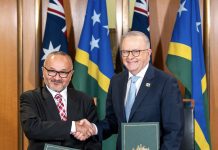
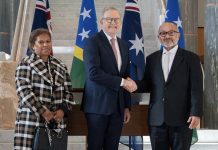
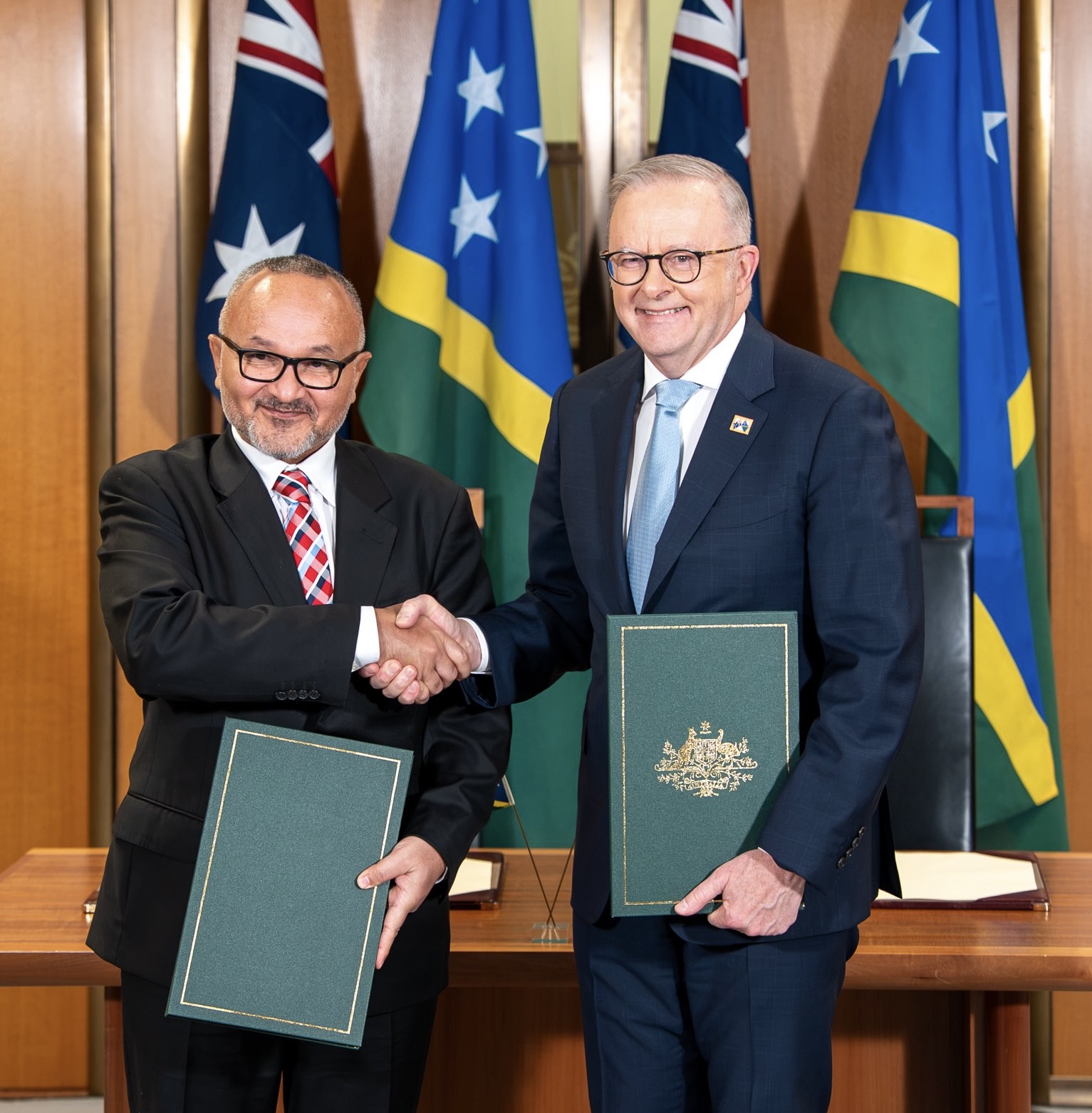
Australian Prime Minister Anthony Albanese and his Solomon Islands counterpart, Matthew Wale, signed the agreement in Canberra on Wednesday, November 25, 2026, marking a new chapter in bilateral relations and strengthening Australia’s position as a key security and development partner in the region.
The agreement comes amid growing strategic competition in the Pacific, particularly following the Solomon Islands’ security agreement with China under its previous government. With the existing China agreement due to expire in April 2027, the new treaty signals a major shift in Honiara’s security partnership, although the Solomon Islands retains full sovereignty over its foreign and security policy.
Under the treaty, Australia will support the modernisation of the Royal Solomon Islands Police Force, strengthen border management and provide additional resources for education, infrastructure, renewable energy and economic development. It also includes improved visa arrangements, expanded labour mobility opportunities and increased skills training for Solomon Islanders.
Importantly, the treaty affirms Solomon Islands’ decision to choose Australia as its primary security partner while ruling out foreign military or security bases and ensuring sensitive infrastructure remains free from militarisation and unauthorised foreign access.
The agreement also reinforces the principle that Pacific security is a collective responsibility of Pacific Islands Forum members, reflecting the region’s preference for cooperation and regional solutions.
Beyond security, the treaty represents a broader commitment to economic development, people-to-people links and long-term cooperation. For Australia, it strengthens its strategic engagement with a neighbouring Pacific nation at a time when regional security partnerships and external influence are increasingly important.