















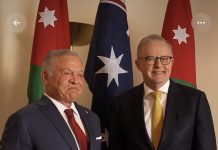


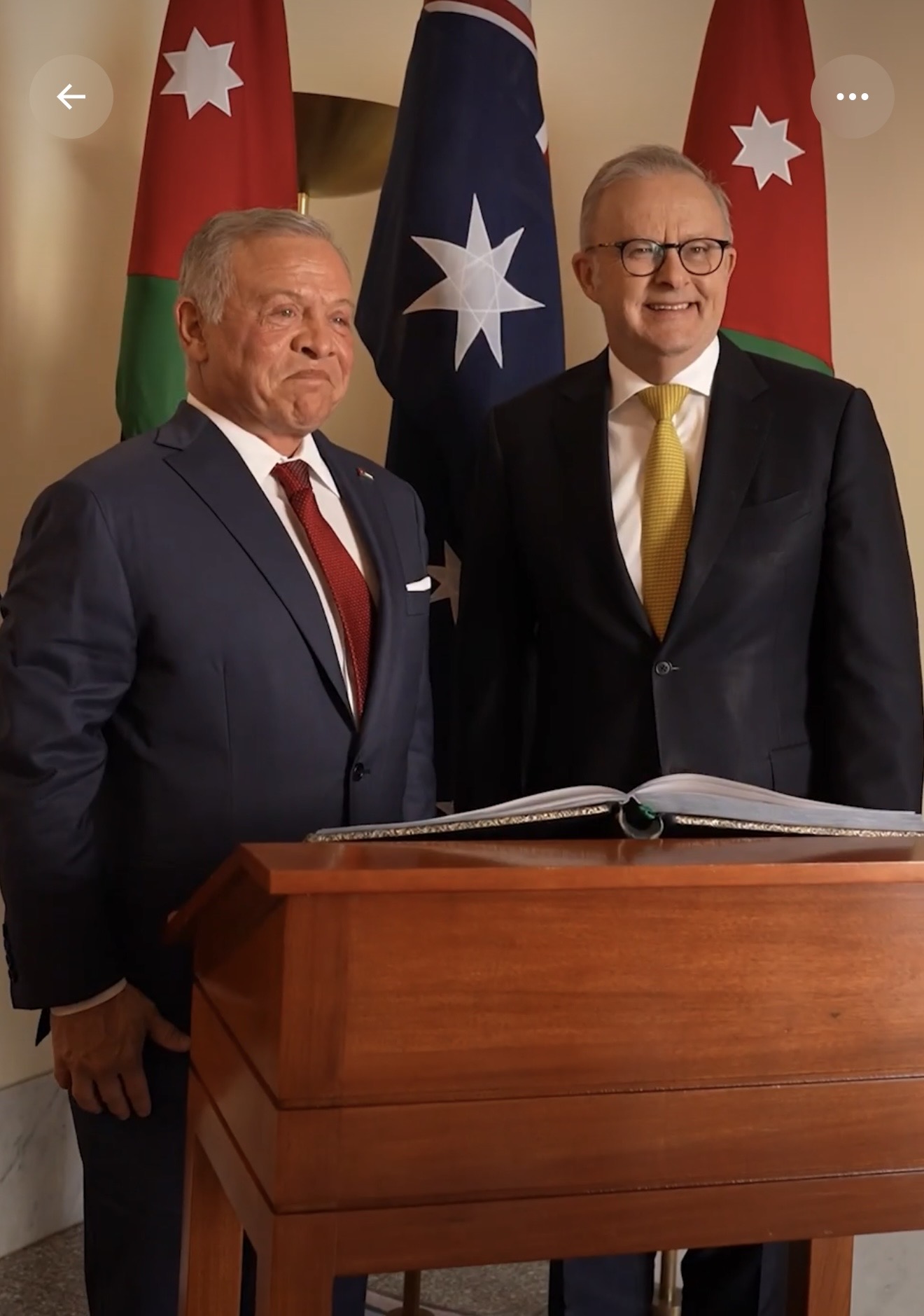
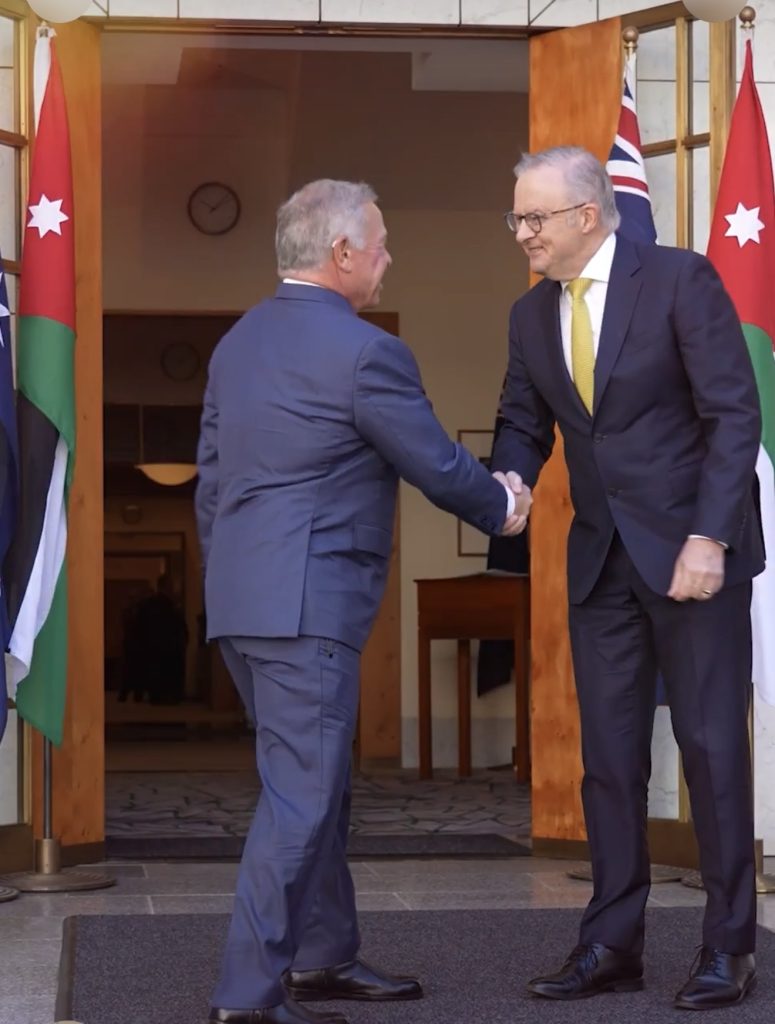
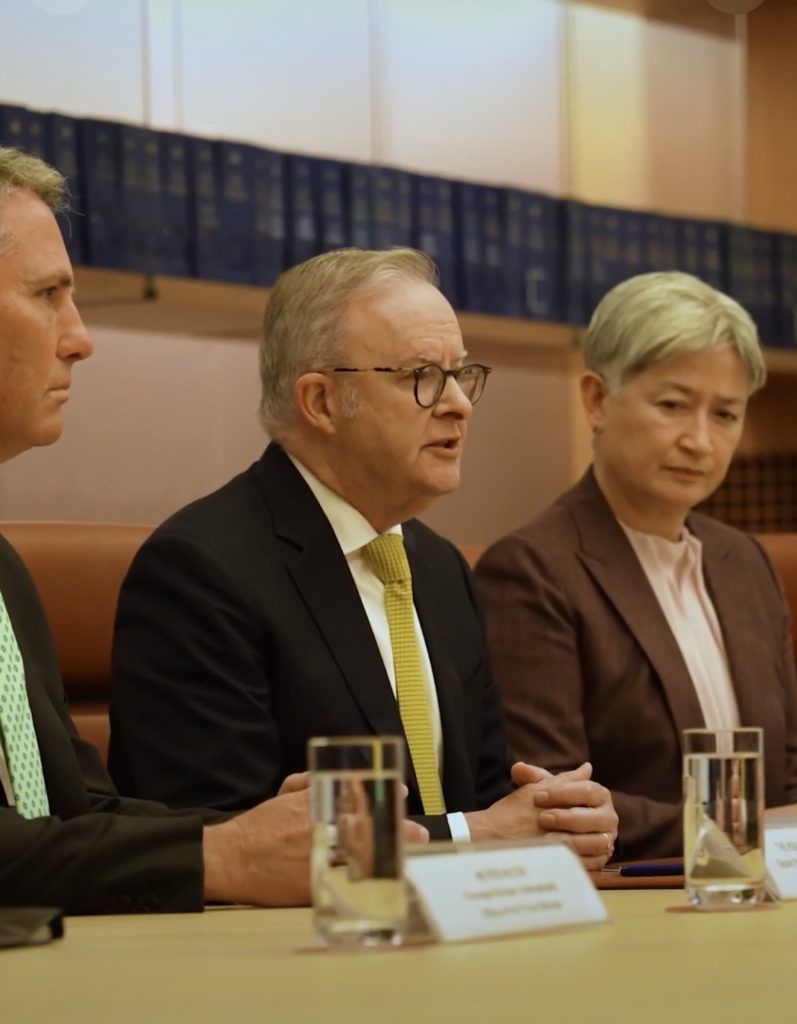
CANBERRA, October 14, 2026 — Australian Prime Minister Anthony Albanese and Jordan’s King Abdullah II have reaffirmed their commitment to a two-state solution to the Israeli-Palestinian conflict, regional peace and stronger cooperation against terrorism and violent extremism during official talks in Canberra.
The leaders met on Wednesday during King Abdullah’s two-day official visit to Australia from October 13 to 14, issuing a joint statement outlining an expanded agenda for bilateral cooperation and addressing key regional and international security challenges.
Australia and Jordan reaffirmed that a two-state solution, consistent with international law and relevant United Nations Security Council resolutions, remains the only path to achieving a just and lasting peace. The statement underscored support for the establishment of an independent Palestinian state alongside Israel.
Both leaders rejected any attempts to annex the occupied West Bank or displace the Palestinian people. They also condemned Israel’s proposed E1 settlement project, describing it as a violation of international law.
The leaders stressed the need to preserve the historical and legal status quo at Muslim and Christian holy sites in Jerusalem, with Australia recognising Jordan’s longstanding Hashemite custodianship of the sites.
On Gaza, they called for the full implementation of the Gaza Peace Plan in accordance with UN Security Council Resolution 2803 (2025), emphasising civilian protection and the safe, rapid and unhindered delivery of humanitarian assistance. They also called for continued support for the UN Relief and Works Agency for Palestine Refugees (UNRWA) to fulfil its mandate.
Australia reiterated its commitment to supporting Jordan’s humanitarian and refugee response, particularly concerning Gaza and Syria, while both leaders urged predictable international assistance for refugees and the communities hosting them.
Stronger action against terrorism and extremism
Counterterrorism emerged as a central pillar of the enhanced partnership, with both countries unequivocally condemning terrorism and violent extremism in all their forms.
Building on longstanding defence, intelligence, border management and law enforcement ties, Australia and Jordan agreed to strengthen information sharing and operational coordination to prevent and disrupt terrorist activities, financing and recruitment.
The leaders also welcomed opportunities to deepen defence cooperation through military training, professional exchanges, joint operations, peacekeeping and cooperation in defence technology and industry.
Australia welcomed King Abdullah’s leadership in advancing international counterterrorism cooperation through the Aqaba Process. The Jordanian monarch also welcomed Australia’s interest in hosting an Aqaba Process meeting in 2027 focused on countering online extremism and the misuse of emerging technologies.
Regional stability and diplomatic solutions
The two leaders expressed concern over continuing tensions in the Middle East and called for collective efforts to de-escalate conflicts through diplomacy and dialogue.

Australia strongly condemned Iranian attacks targeting Jordan and expressed solidarity with the Kingdom. Both sides supported diplomatic efforts to resolve the crisis, address its underlying causes and achieve sustainable regional security.
They also reaffirmed support for Syria’s unity and sovereignty, Lebanon’s security and state authority, and Yemen’s legitimate government and efforts to secure a lasting political settlement. The leaders condemned Houthi attacks on Saudi Arabia, particularly those targeting civilians and civilian infrastructure.
Beyond regional security, Australia and Jordan committed to expanding trade and investment, education and research partnerships, climate resilience, water security, sustainable agriculture and mental health cooperation.
The leaders reaffirmed their support for international law, humanitarian principles and a rules-based international order, stressing that sustained international cooperation remains essential to achieving lasting peace, security and stability in the Middle East.