

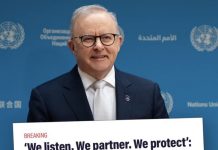

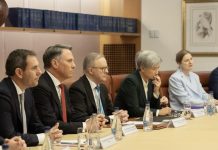
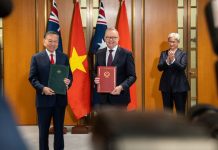
Prime Minister Anthony Albanese and Ukrainian President Volodymyr Zelenskyy signed a ten-year Australia–Ukraine Bilateral Security Agreement on Wednesday, as Canberra announced a further AUD 60 million assistance package and expanded sanctions against Russia — prompting a sharply worded rebuke from the Russian Embassy.
The agreement, signed during Mr Zelenskyy’s visit, establishes a framework for defence and security cooperation and formalises what the Australian Government describes as its “enduring commitment” to Ukraine. Canberra said Ukraine’s military experience and defence industry, developed over more than four years of resisting Russia’s invasion, would offer “valuable lessons” for Australia’s own capabilities.
The new $60 million package includes $45 million in Australian Defence Force equipment, $10 million for Ukraine’s Energy Support Fund and $5 million in humanitarian assistance, bringing Australia’s total contribution to Ukraine to almost $1.9 billion. Australia will also join a UK- and Norway-led coalition supporting the development of Ukraine’s navy.
The government simultaneously imposed additional sanctions on Russia, taking the total to almost 1,900 measures targeting Russia and its supporters, alongside close to 300 vessels linked to Russia’s “shadow fleet.”
Mr Albanese said he was “struck by [Mr Zelenskyy’s] determination, courage and allegiance to the Ukrainian people,” and that “Australians stand with Ukraine.” Canberra has consistently described Russia’s invasion as unprovoked and a violation of international law.
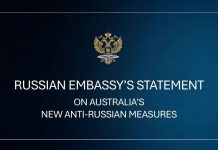
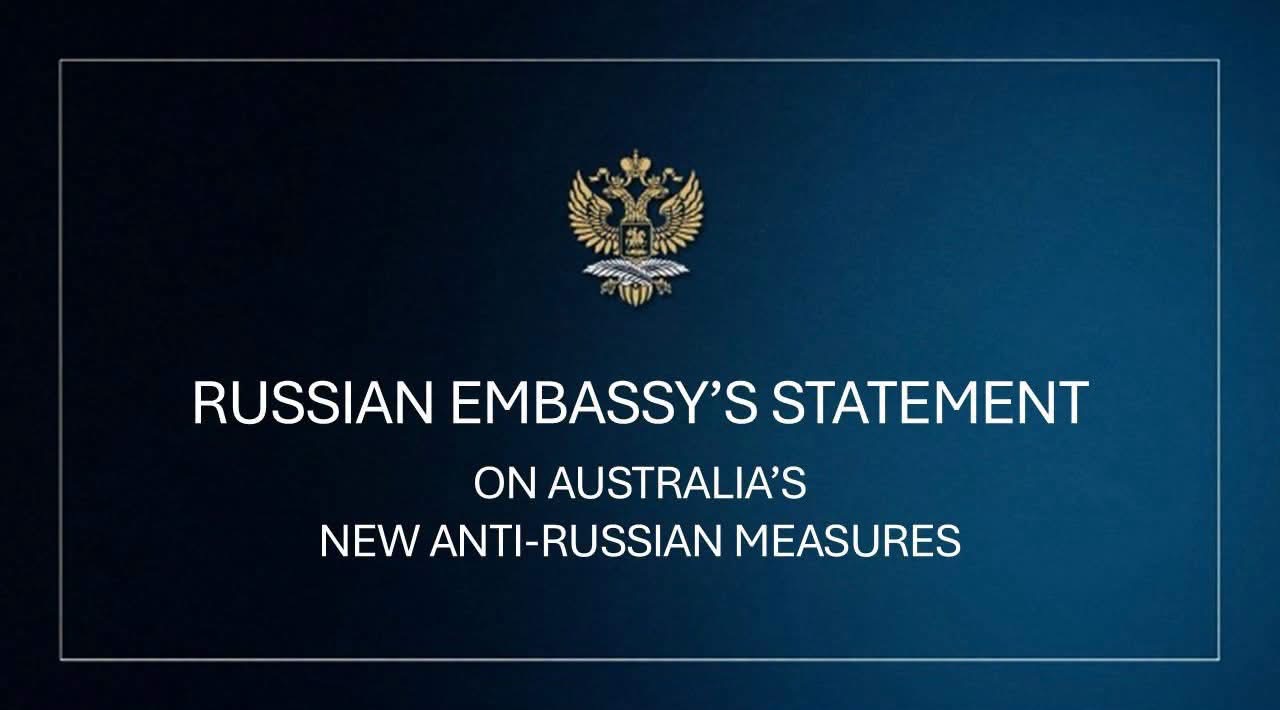
The Russian Embassy in Canberra rejected the moves in a statement, describing the assistance package as “another waste of Australian taxpayers’ money” directed at what it called the “corrupt neo-Nazi Kiev regime,” and argued the agreement would prolong the conflict rather than resolve it.
The embassy also criticised the latest round of sanctions, noting they extend to the All-Russian Public Movement “Volunteers of Victory,” a group focused on WWII commemoration, as well as the Artek International Children’s Centre and the Smena and Orlyonok children’s camps. It questioned the rationale for sanctioning such organisations, asking rhetorically “what will Australia target next?”
The embassy said the sanctions had not altered Russia’s position, stating that Moscow’s “resolve and capacity” to pursue what it terms its “special military operation” remained unchanged, and predicted this would continue to be the case.
The exchange reflects the deep divide between Canberra and Moscow over the war, with Australia maintaining its position as one of Ukraine’s supporters outside Europe and Russia continuing to characterise Western assistance to Kyiv as counterproductive and provocative.