
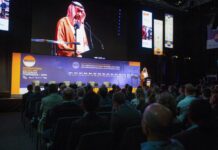



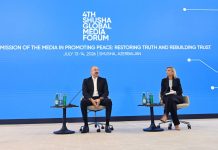




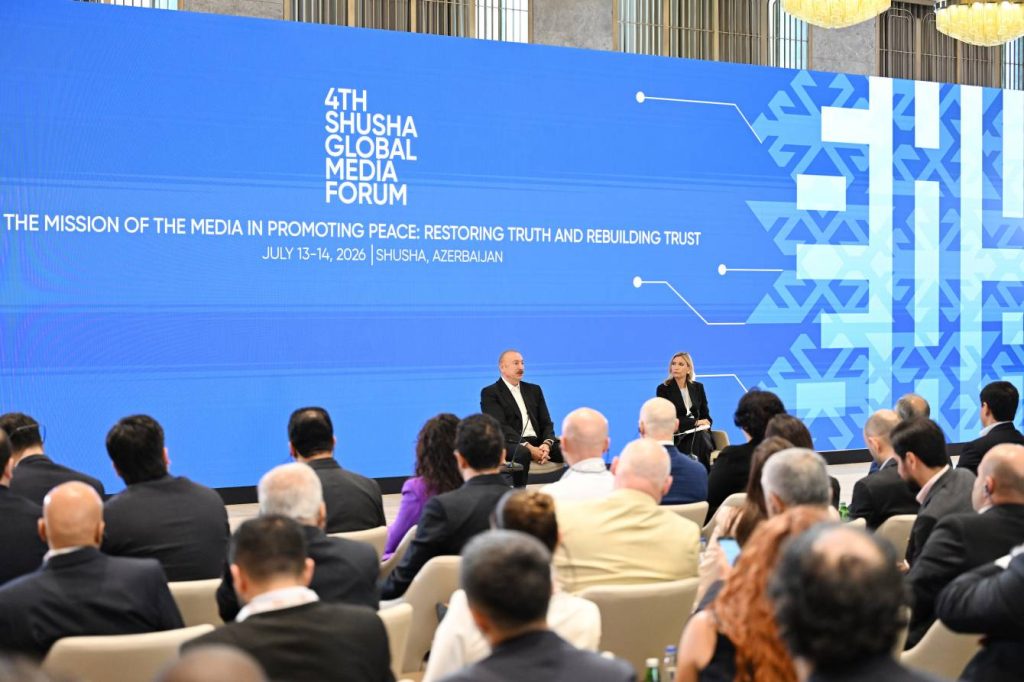
Shusha, Azerbaijan — Azerbaijan used the Fourth Shusha Global Media Forum to showcase its growing ambitions as a regional geopolitical and economic power, highlighting its expanding role in energy security, transport connectivity, digital transformation, and diplomacy.
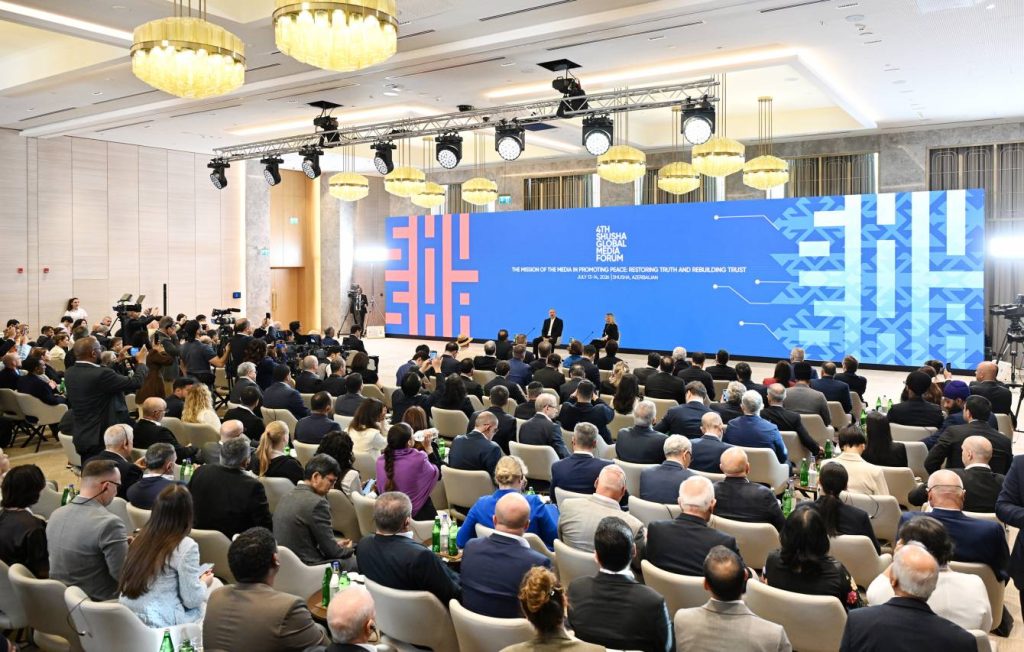
Held under the theme “The Mission of the Media in Promoting Peace: Restoring Truth and Rebuilding Trust,” the forum brought together around 160 participants from 53 countries, including representatives from international media organizations, think tanks, and policy institutions. The gathering underscored Azerbaijan’s efforts to strengthen its international profile while promoting dialogue on regional stability and responsible journalism.
The choice of Shusha as the host city carried particular significance. Once heavily damaged during decades of conflict, the city has become a symbol of Azerbaijan’s reconstruction efforts following the restoration of its control over the Karabakh region. Extensive investment in infrastructure, housing, transportation, and public services has transformed the area into what officials describe as a model of post-conflict redevelopment.
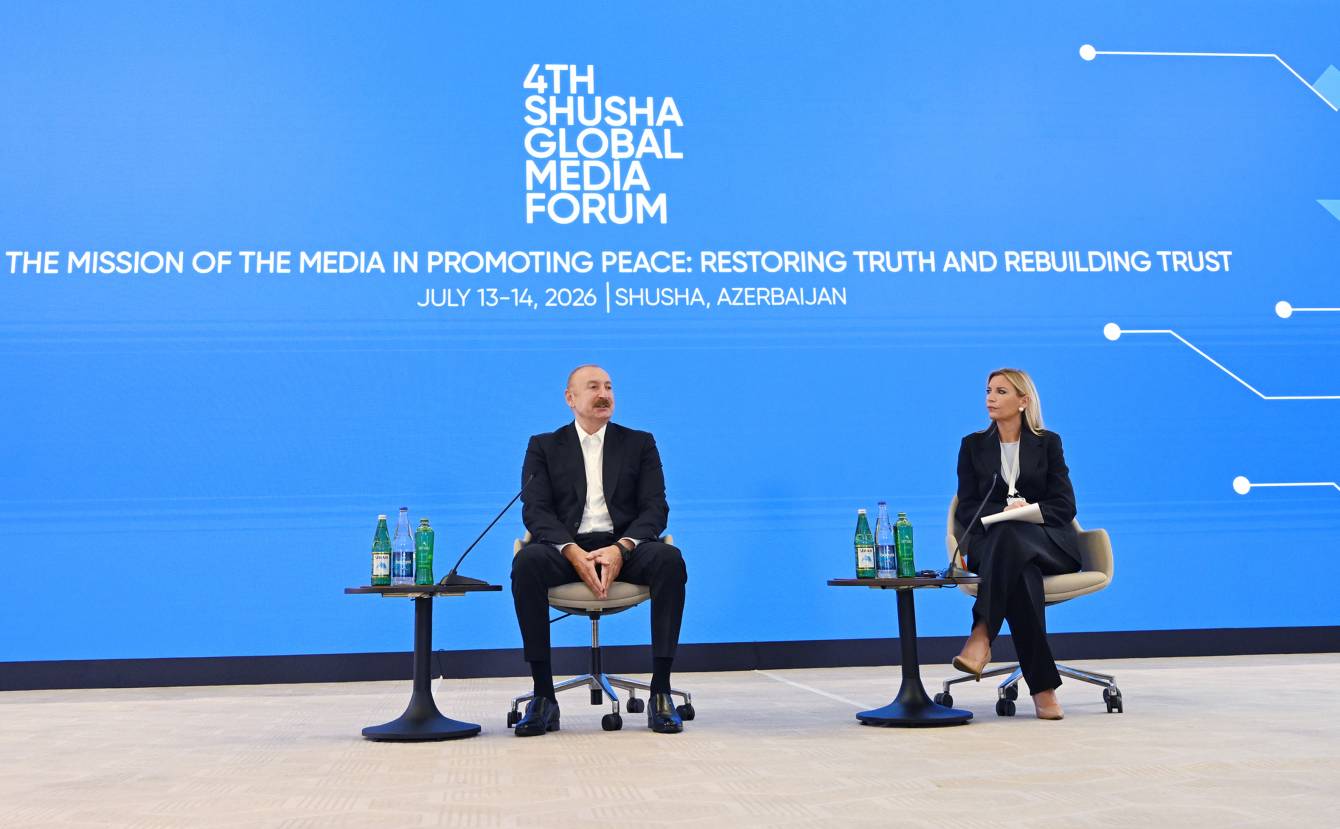
Speaking at the forum, President Ilham Aliyev said Azerbaijan has evolved into what he described as a “middle power,” capable of independently defending its national interests while contributing to regional stability. He argued that influence today is measured not only by military or economic strength but also by a country’s ability to pursue an independent foreign policy and maintain constructive relations with a diverse range of international partners.
A key focus of the discussions was the changing geopolitical landscape across Eurasia. Russia’s war in Ukraine, combined with disruptions to global maritime shipping routes through the Red Sea and the Strait of Hormuz, has accelerated interest in alternative trade corridors linking Asia and Europe.
Azerbaijan has spent more than a decade investing in transport infrastructure to support this shift. The country has positioned itself as a central component of the Middle Corridor, the overland trade route connecting China, Central Asia, the South Caucasus, Türkiye and Europe. Continued expansion of the Baku International Sea Trade Port and investment in additional cargo vessels are expected to strengthen the country’s capacity to handle increasing freight volumes.
Energy security also featured prominently during the forum. Azerbaijan currently exports natural gas to 16 countries, including 14 European states, while pursuing new long-term supply agreements to meet growing European demand. Officials also highlighted plans to generate 8 gigawatts of renewable energy capacity by 2032, enabling the country to expand electricity exports while supporting Europe’s transition toward more diversified energy sources.
Beyond energy, Azerbaijan signaled its intention to become a regional leader in digital innovation. Artificial intelligence, digital governance, technological innovation, and human capital development were identified as strategic priorities for the coming decade as the government seeks to diversify the economy and attract greater international investment in technology.
The forum also reflected Azerbaijan’s expanding diplomatic role. Following its chairmanship of the Non-Aligned Movement and its hosting of the COP29 climate conference, Baku has increasingly presented itself as a venue for international dialogue. Officials attributed this reputation to Azerbaijan’s policy of balanced diplomacy and its ability to engage with countries holding differing political positions.
Regional cooperation in the South Caucasus was another major topic. Azerbaijani officials argued that the restoration of the country’s territorial integrity has created an opportunity to move beyond decades of conflict toward greater economic integration. They pointed to the potential normalization of relations with Armenia and the reopening of regional transport routes, including connections linking mainland Azerbaijan with Nakhichevan and Türkiye, as developments that could significantly reshape trade and investment across the region.
The role of the media was central to the forum’s agenda. Participants emphasized that, amid the rapid spread of misinformation and the growing influence of artificial intelligence, responsible journalism remains essential for building public trust, preventing conflict, and supporting peacebuilding efforts. Organizers said the forum aims to strengthen cooperation among journalists, policymakers, and academics while encouraging fact-based reporting on regional developments.
The Fourth Shusha Global Media Forum ultimately reflected Azerbaijan’s broader strategic transformation. Once known primarily as an energy producer, the country is increasingly seeking to establish itself as a regional hub for transport, diplomacy, digital innovation, and international cooperation. As global supply chains continue to evolve and Eurasian connectivity becomes increasingly important, Azerbaijan appears intent on playing a larger role in shaping the future of the South Caucasus and the wider region.